Rich Dad Poor Dad Review: The Book That Starts the Money Conversation
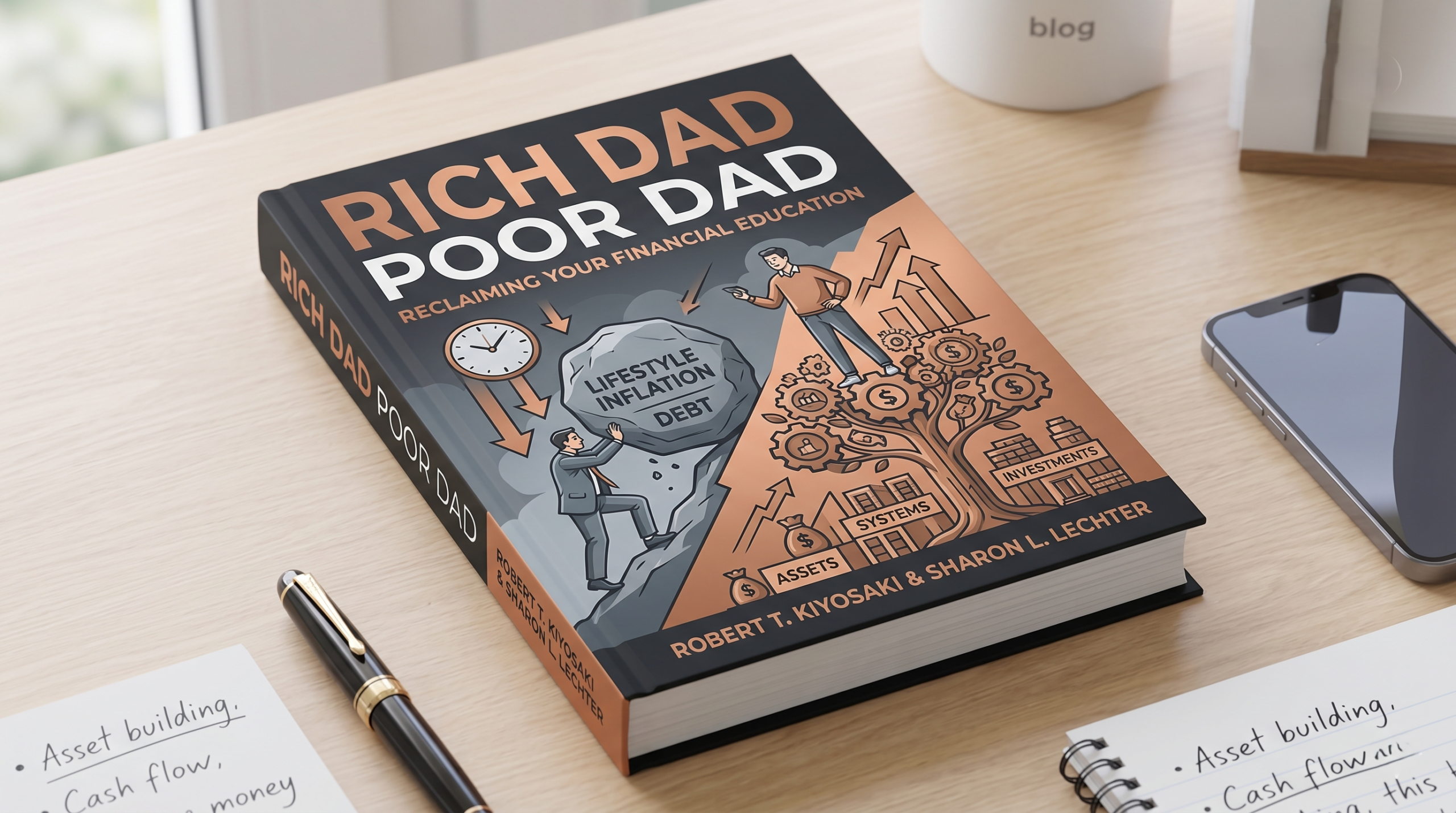
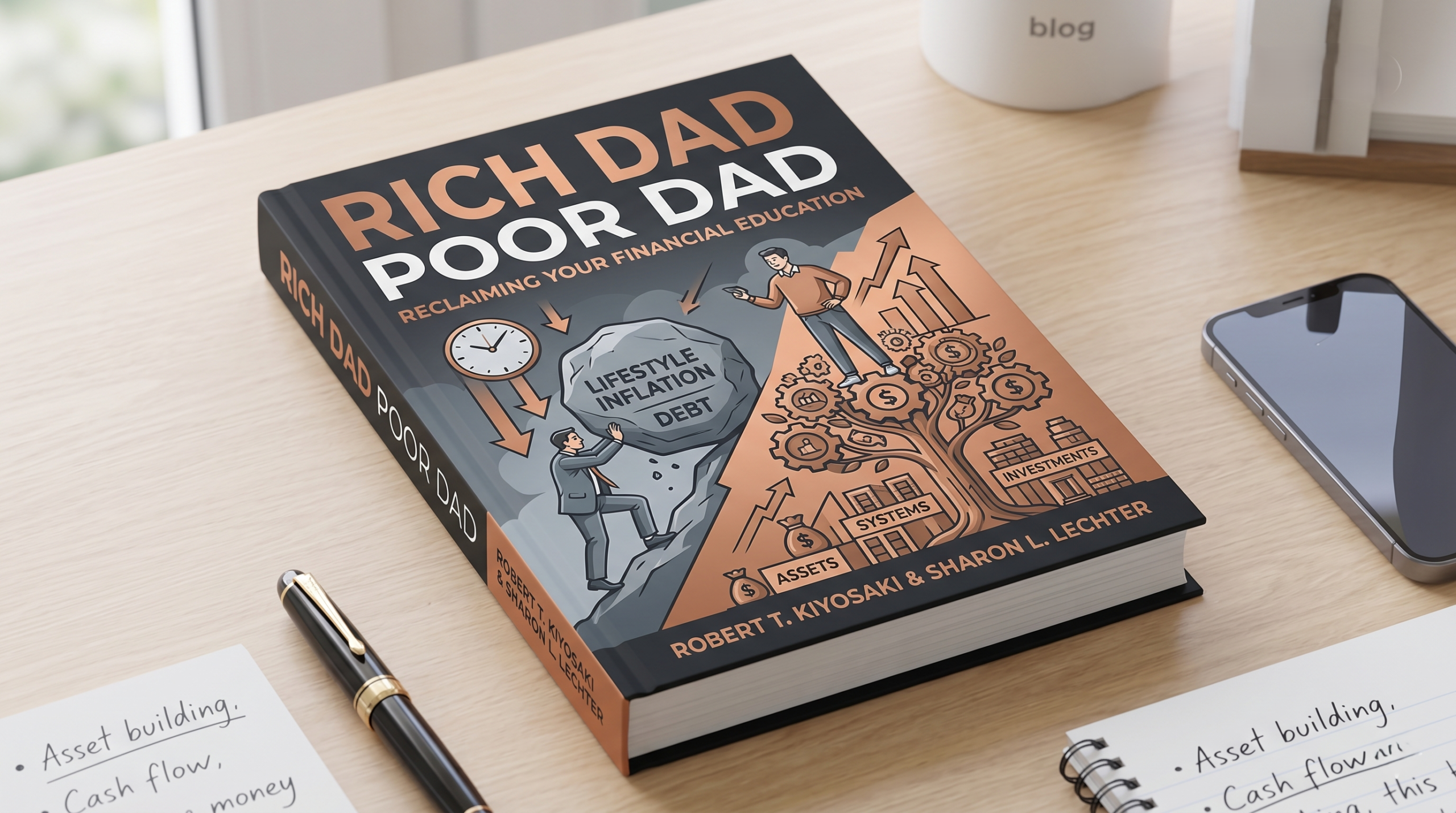
Rich Dad Poor Dad is not a perfect personal finance book. It is not a detailed investing manual, it does not teach you how to value a stock, and it will not hand you a complete roadmap to wealth. But for millions of readers, it has done something more basic and arguably more important: it changed the way they think about money.
That makes it a fitting first review for the Book Reviews section of Vell Journal. We are not starting with the most technical finance book, or the most academic one. We are starting with a book that acts like a doorway. For many people, Rich Dad Poor Dad is the first serious push toward asking better questions: What is an asset? Why do some people work harder but feel less free? Why is financial education rarely taught with the same urgency as academic education?
Book Snapshot
- Book: Rich Dad Poor Dad
- Author: Robert T. Kiyosaki, with Sharon L. Lechter
- Category: Personal finance, money mindset, investing
- Best for: Beginners who want to rethink their relationship with money
- Vell Journal Rating: 4 out of 5
The Core Idea
The book is built around a simple contrast. The “poor dad” represents the traditional path: study hard, get a stable job, earn a salary, save what you can, and avoid financial risk. The “rich dad” represents a different way of thinking: learn how money works, buy or build assets, understand business, and make financial decisions from a position of ownership rather than dependency.
This contrast is intentionally simple, and sometimes too simple. Still, the reason the book has endured is that the basic message lands. Kiyosaki argues that income alone does not make a person wealthy. What matters is whether money is being converted into assets that can produce more money over time.
In other words, the book asks readers to stop treating money only as something to spend, save, or fear. It asks them to treat money as something to understand.
What the Book Gets Right
1. It makes financial education feel urgent
The strongest part of Rich Dad Poor Dad is not a particular investment strategy. It is the emotional shift it creates. The book makes financial literacy feel like a survival skill, not a hobby for people who already have money.
Many readers grow up learning how to earn marks, get degrees, and find employment, but not how to read a balance sheet, think about cash flow, or distinguish between looking rich and becoming financially resilient. The book speaks directly to that gap.
2. It explains assets and liabilities in a memorable way
Kiyosaki’s most famous lesson is also the most useful one: wealthy people focus on acquiring assets, while many others accumulate liabilities that look like success. A car, a bigger house, expensive subscriptions, luxury habits, and lifestyle inflation can all make someone appear successful while quietly weakening their financial position.
The book’s definition of an asset is practical: an asset puts money in your pocket, while a liability takes money out. That framing may be simplified, but for beginners it is powerful. It forces a reader to look beyond appearances and ask, “Does this purchase strengthen me or trap me?”
3. It challenges the salary-only mindset
The book does not say jobs are bad. What it does say is that relying only on a salary can be fragile. A job can provide income, structure, and experience, but it does not automatically create freedom. If every rupee or dollar that enters your life immediately leaves through expenses, then a higher salary may only create a more expensive version of the same problem.
This is one of the book’s most useful provocations. It encourages readers to think about side income, ownership, investing, business skills, and long-term financial independence instead of treating monthly income as the entire game.
Where the Book Falls Short
A good review should not treat a popular book as untouchable. Rich Dad Poor Dad has real weaknesses, especially if the reader expects detailed financial instruction.
1. It is more mindset than manual
The book inspires action, but it does not provide enough step-by-step guidance. Readers may finish it excited about buying assets, but still unsure how to evaluate real estate, analyze a business, manage risk, or build an investment plan responsibly.
That is not necessarily a failure, but it is important. This book should be treated as a starting point, not a final education.
2. It can oversimplify debt and risk
Kiyosaki often presents debt, entrepreneurship, and real estate as tools that can accelerate wealth. That can be true. But debt is not magic. Leverage can increase returns, but it can also magnify mistakes. Real estate can build wealth, but it can also create stress, illiquidity, maintenance costs, legal problems, and market risk.
Beginners should read the book’s enthusiasm with caution. The mindset is useful, but every financial decision still needs numbers, discipline, and risk management.
3. Some examples feel too neat
The book uses stories to teach ideas. That makes it readable, but it can also make complex realities feel simpler than they are. In real life, building wealth usually involves boring consistency, delayed gratification, tax awareness, emergency funds, insurance, diversification, and years of learning from mistakes.
The book is excellent at waking people up. It is less complete at showing them what to do the morning after.
Who Should Read It?
You should read Rich Dad Poor Dad if you are new to personal finance, feel stuck in a paycheck-to-paycheck cycle, or want a simple introduction to the idea that income and wealth are not the same thing.
It is especially useful for students, early-career professionals, first-time earners, and anyone who has never seriously thought about assets, liabilities, cash flow, or financial independence.
However, if you already understand investing, business accounting, asset allocation, and risk management, this book may feel basic. In that case, its value is less technical and more philosophical.
The Best Way to Read It
Read it with a notebook, not as a set of instructions to copy, but as a set of questions to ask yourself:
- What assets am I currently building?
- Which expenses in my life look like success but reduce my freedom?
- Do I understand where my money goes every month?
- What financial skill should I learn next?
- Am I working only for income, or also building ownership?
If the book pushes you to ask those questions seriously, it has done its job.
Final Verdict
Rich Dad Poor Dad remains powerful because it is simple, direct, and emotionally memorable. It takes a subject that often feels intimidating and turns it into a conversation anyone can enter. That accessibility is its greatest strength.
At the same time, readers should not stop here. The book should lead to deeper study: investing basics, accounting, tax rules, business models, real estate risks, behavioral finance, and long-term portfolio building. Financial independence is not built by motivation alone. It is built by learning, patience, good decisions, and repeated action.
For a first personal finance book, though, Rich Dad Poor Dad still earns its reputation. It may not teach everything, but it can change the direction of a reader’s financial life. Sometimes, the first shift in mindset is the most valuable return of all.
Vell Journal Rating: 4/5
Note: This review is for educational purposes only and should not be taken as personal financial advice.

rrp12315@gmail.com
Senior Editor at Vell Journal, specializing in technology and finance.