
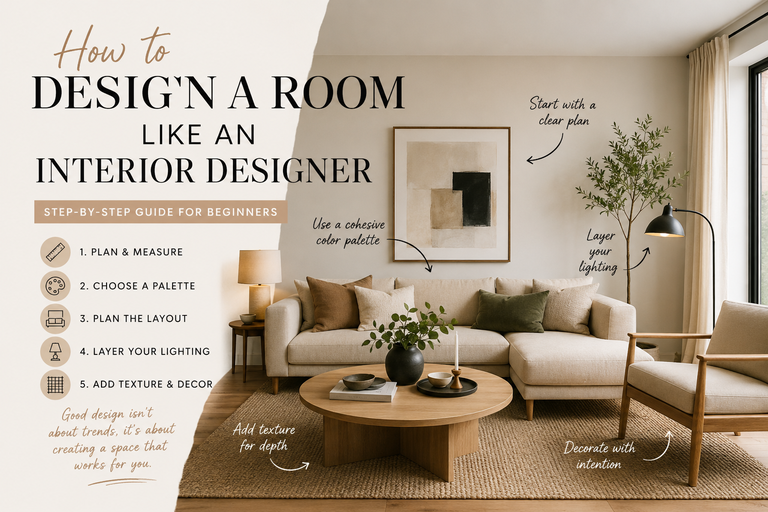
A few months ago, I visited a client’s apartment because they felt something was wrong with their living room.
The furniture was expensive. The walls had been freshly painted. They had even copied ideas from several Pinterest boards.
Yet the room still felt uncomfortable.
After spending ten minutes in the space, the problem became obvious. There was no plan behind the design decisions. The sofa was too large for the room, the lighting came from a single ceiling fixture, and every piece of furniture had been pushed against a wall.
This is something I see surprisingly often.
Many people assume interior designers have a special eye for design. While experience certainly helps, most successful projects come down to following a process. Designers don’t randomly choose furniture or colors and hope everything works out. They make decisions in a specific order.
If you’re designing a room for the first time, here’s the same process I use when planning residential interiors.
Start With Function, Not Furniture
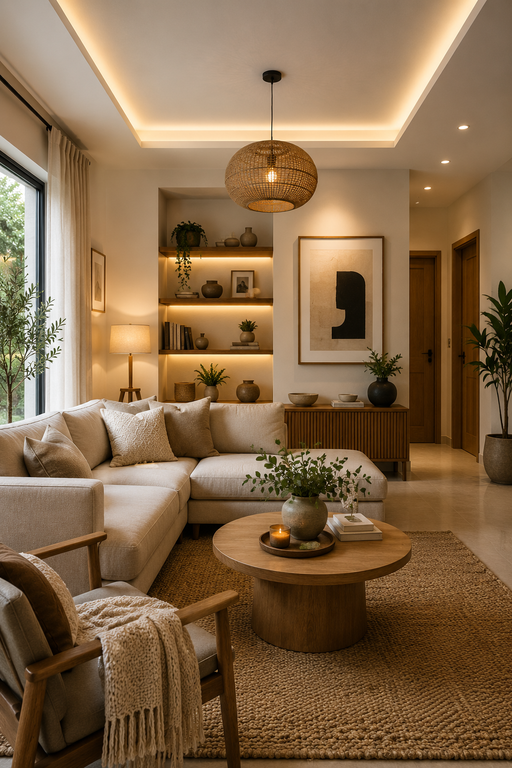
One mistake I see repeatedly is people falling in love with furniture before they understand what the room actually needs.
A room should serve the people living in it.
For example, a young professional working from home may need a bedroom that includes a compact workspace. A family with children will have completely different priorities in a living room than someone who mainly entertains guests on weekends.
Before buying anything, spend a few minutes thinking about how you’ll use the space every day.
The answers often reveal what the room truly needs and what it can do without.
Measure First. Always.
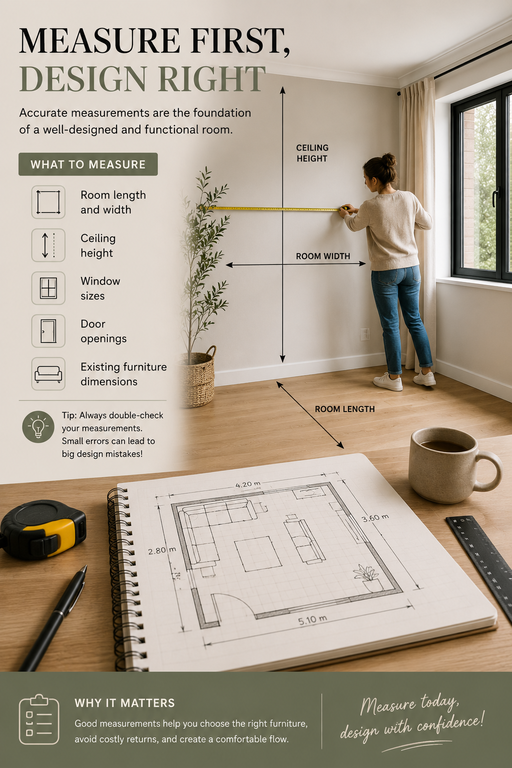
This may not be the most exciting part of interior design, but it has probably saved my clients more money than any other piece of advice.
I once visited a project where a beautiful sectional sofa had just been delivered. The problem? It blocked access to the balcony door.
The sofa wasn’t the issue. The lack of measurements was.
Before you start shopping, measure the room carefully and sketch a simple floor plan. It doesn’t need to look professional. Even a rough drawing helps you understand how much space you’re actually working with.
Trust me, measuring for twenty minutes is much easier than replacing furniture later.
Stop Mixing Every Style You Like.
Pinterest can be both helpful and dangerous.
The challenge is that you might save a modern living room, a farmhouse kitchen, a luxury hotel bedroom, and a Scandinavian apartment—all within five minutes.
Individually, they look great.
Together, they often create a room that feels confused.
Instead of copying dozens of spaces, look for patterns in the images you’re saving. You may notice that you’re consistently drawn to warm wood finishes, neutral colors, or clean-lined furniture.
Those patterns are usually a better guide than any trend currently dominating social media.
[…] build outward from there. If you are starting from scratch or just rethinking a single room, our beginner’s guide to designing a room like an interior designer walks through the planning process step by […]
[…] you are just getting started, our guide to common interior design mistakes beginners make pairs well with this challenge — it covers the planning steps I used before spending a single […]
[…] 🔗 Take Action: Avoid the “floating rug syndrome” and other costly layout errors by auditing your space here: 3 Interior Design Mistakes Beginners Make (And How to Avoid Them). […]