
Don’t hide your grandmother’s wooden cabinet or that beautiful thrift store dresser. Instead, make it the most interesting piece in your home.
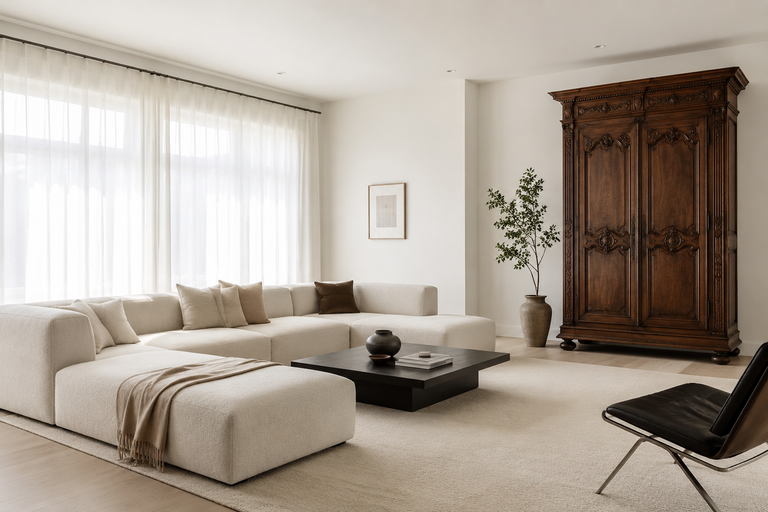
Have You Ever Felt Like Your Furniture Doesn’t Belong Together?
You finally found the perfect vintage wooden cabinet. Maybe it came from your parents, maybe you discovered it at a flea market, or maybe you rescued it from an online marketplace for an unbelievable price.
Then you brought it home.
Instead of looking stylish, it suddenly made your room feel old-fashioned. Sound familiar?
Figuring out exactly how to mix vintage wood furniture with modern pieces is one of the biggest challenges homeowners face. Many assume vintage furniture only works with traditional interiors, while modern furniture belongs in sleek contemporary homes.
The truth is exactly the opposite.
Some of the world’s most beautiful homes intentionally combine furniture from different decades. Interior designers rarely decorate a room using pieces from a single style. They mix old with new because it creates personality, warmth, and character.
The secret isn’t matching everything.
It’s knowing how to create contrast without creating chaos.
Today I’ll show you the exact method designers use, starting with one simple principle called the 80/20 Rule.
The 80/20 Rule of Mixing Furniture Styles
If there’s one rule that instantly makes a room feel intentional, this is it.
Think of your room as telling one clear story.
Around 80% of your furniture should belong to one design direction, while the remaining 20% becomes the accent that adds personality.
For most homes today, that means:
- 80% Modern or Contemporary
- 20% Vintage or Antique
That vintage wooden console becomes the statement piece instead of competing with everything else.
Why Not 50/50?
Many people think equal balance sounds logical.
Unfortunately, it usually creates confusion.
When half the room is modern and the other half is antique, your eyes don’t know where to focus. Nothing feels intentional.
Instead of looking curated, the room often feels like two different homes accidentally sharing the same space.
Keeping vintage furniture to around twenty percent gives your room a clear identity while still letting older pieces shine.
Before Mixing Furniture, Understand Wood Undertones
Here’s something many decorating blogs never explain.
Not all brown wood is the same.
Two wooden cabinets may look similar in photos but completely clash in real life because their undertones are different.
Professional designers always notice this.
Warm Wood Tones
Warm woods usually have hints of:
- Honey
- Golden Yellow
- Orange
- Red
- Amber
Examples include oak, cherry, mahogany, and teak. These woods naturally create warmth and make a space feel welcoming.
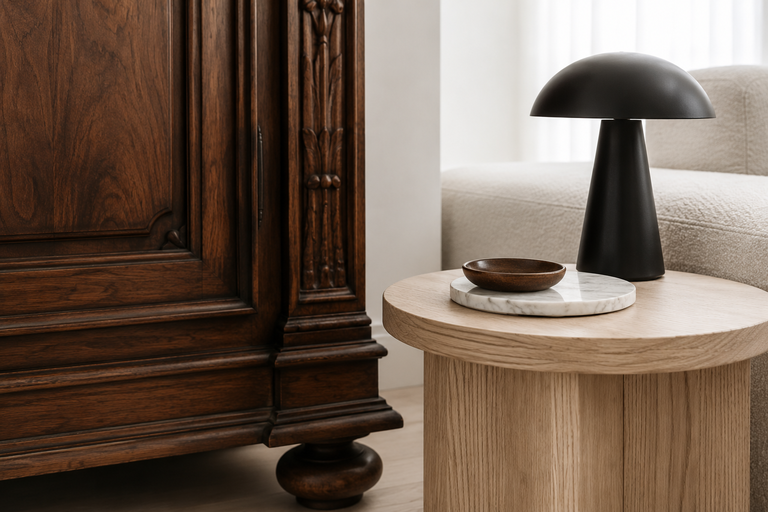
Cool Wood Tones
Cool woods lean toward:
- Gray
- Ash
- Espresso
- Dark Walnut
- Black
These feel cleaner, calmer, and work beautifully in minimalist interiors.
Follow the Rule of Three
One wood tone can feel boring.
Five different wood colors can feel messy.
Three is usually the sweet spot.
For example:
- Walnut dining table
- Oak shelving
- Black stained coffee table
That’s enough variation to make the room interesting without overwhelming it.
How Designers Make Different Woods Look Like They Belong Together
Imagine placing an old walnut cabinet beside a light beige sofa.
Something still feels disconnected.
The missing piece is usually the textiles.
A rug with warm beige, brown, cream, and charcoal can quietly connect both furniture pieces.
Throw pillows, curtains, artwork, and blankets work the same way.
Instead of trying to make furniture match, designers let fabrics create the connection.
It’s a subtle trick, but it completely changes how the room feels.
Three Vintage-and-Modern Combinations That Always Work
If you’re unsure where to start, copy one of these combinations.
They’re simple, timeless, and surprisingly difficult to get wrong.
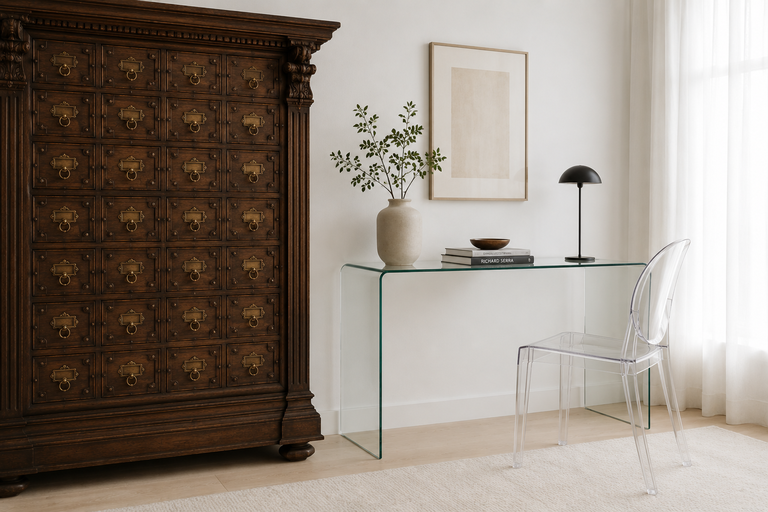
1. Heavy Antique Cabinet + Glass or Acrylic Furniture
Large antique furniture often feels visually heavy.
The easiest way to balance that weight is by introducing transparent materials.
A glass coffee table, acrylic chair, or clear side table almost disappears visually, allowing the wooden cabinet to remain the star without making the room feel crowded.
It’s one of the oldest tricks interior designers use in smaller spaces.
2. Rustic Farmhouse Table + Modern Dining Chairs
This combination has become popular for a reason.
A weathered wooden table adds history and texture.
Minimal dining chairs bring clean lines and freshness.
Together they create balance.
The rough grain of reclaimed wood makes sleek furniture feel less cold, while the modern chairs prevent the table from making the room feel overly rustic.
It’s the perfect example of old meeting new.
3. Ornate Wooden Frames + Contemporary Artwork
Not everyone wants to buy vintage furniture.
Luckily, you don’t have to.
One of the easiest ways to introduce classic design is through picture frames.
Take a beautifully carved vintage wooden frame and pair it with modern abstract art.
The contrast feels sophisticated rather than predictable.
It’s affordable, low risk, and works in almost every room.
Mistakes That Instantly Make a Room Feel Outdated
Even beautiful furniture can look wrong if it’s arranged poorly.
These are the mistakes I see most often.
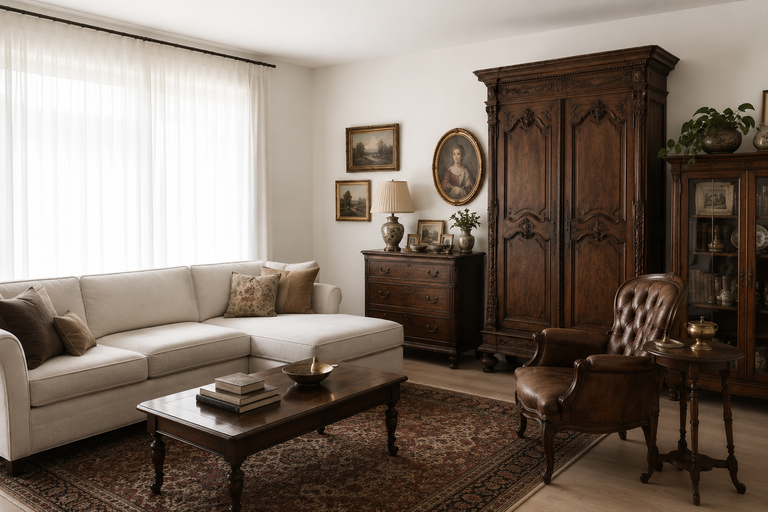
Ignoring Scale
Furniture should feel balanced.
A tiny modern sofa beside a massive antique wardrobe will always look awkward.
Likewise, an oversized Victorian dining table inside a compact apartment can overwhelm the entire room.
Before focusing on style, always compare proportions.
If one piece dominates everything else, the room loses balance.
Keeping Every Vintage Piece Together
Many homeowners unknowingly create an “antique corner.”
All the vintage furniture sits on one side of the room.
Everything modern stays on the other.
Instead of blending styles, you’ve divided the room into two separate zones.
Spread vintage pieces throughout the space.
Let your eye travel naturally from one interesting object to another.
That’s what creates a collected, designer look.
Trying to Match Every Wood Finish
Your furniture doesn’t need identical colors.
Real homes evolve over time.
A slight difference between wood tones actually makes a room feel richer and more authentic.
The goal isn’t perfection.
The goal is harmony.
A Designer’s Final Advice
The most beautiful homes rarely look as though everything was purchased on the same weekend.
Instead, they tell a story.
A handcrafted cabinet from one generation.
A sleek sofa bought a few years later.
A contemporary lamp discovered while travelling.
A vintage mirror rescued from a weekend market.
Each piece has its own history, yet together they create a home that feels personal.
If you’re mixing vintage wood furniture with modern pieces, don’t worry about making everything match.
Focus on creating balance.
Keep one style dominant, respect wood undertones, vary your textures, and let contrast become your greatest design tool.
That’s the difference between a room that feels outdated and one that feels thoughtfully collected.
I’d Love to Hear From You
Do you already own a vintage wooden piece you’re trying to style?
Is it a dining table, dresser, cabinet, coffee table, or something you inherited from family?
Leave a comment below and tell me what you’re working with. I’d be happy to suggest modern furniture that pairs beautifully with it.
[…] How to Mix Vintage Wood Furniture with Modern Pieces (The 80/20 Rule) […]
[…] How to Mix Vintage Wood Furniture with Modern Pieces (The 80/20 Rule) […]
[…] 🔗 Take Action: Master the art of blending eras seamlessly with our ultimate guide: How to Mix Vintage Wood Furniture with Modern Pieces (The 80/20 Rule). […]